Sun Lakes, AZ
Water Softeners in Sun Lakes, With a Photo Record You Keep
We install water softeners sized to your household, add whole-home carbon filtration for disinfectant taste, fit under-sink reverse osmosis for drinking water, and keep your brine tank stocked with automated salt delivery. Homeowners in Sun Lakes, Chandler and Queen Creek get pictures of what we found and what we changed.
- Photos at every step
- Every part named upfront
- Floors covered while we work
- Old equipment hauled away
Where We Install
We are based in Sun Lakes and work inside homes across the southeast Valley. That includes Chandler, Gilbert, Queen Creek and San Tan Valley, plus Tempe, Guadalupe, Maricopa and Sacaton.
- Sun Lakes
- Chandler
- Gilbert
- Tempe
- Guadalupe
- Sacaton
- San Tan Valley
- Queen Creek
- Maricopa
Live a little past those towns? Tell us your cross streets when you phone, and we'll let you know plainly whether we can reach you.
Softeners, Filters and Salt, Installed and Kept Running
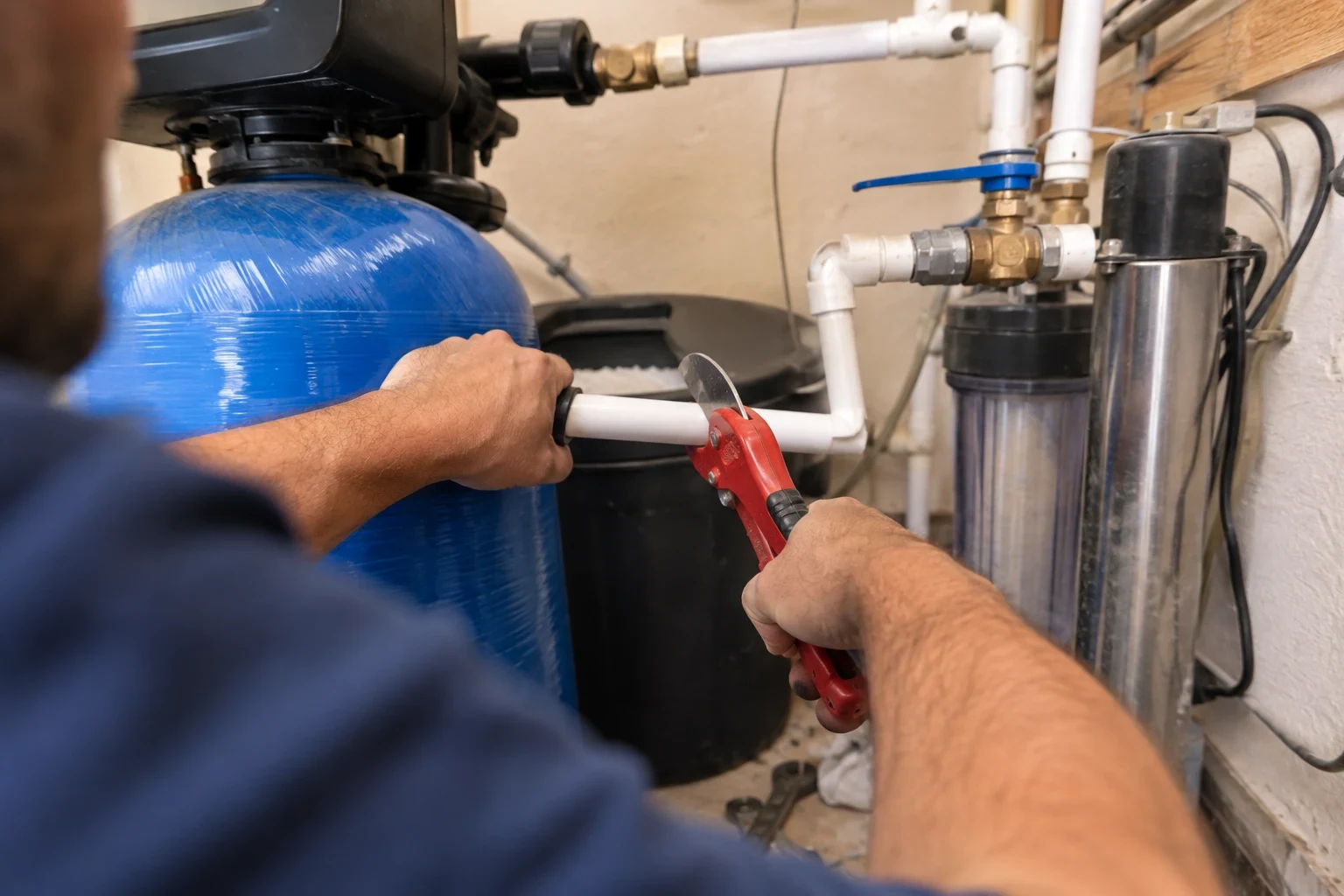
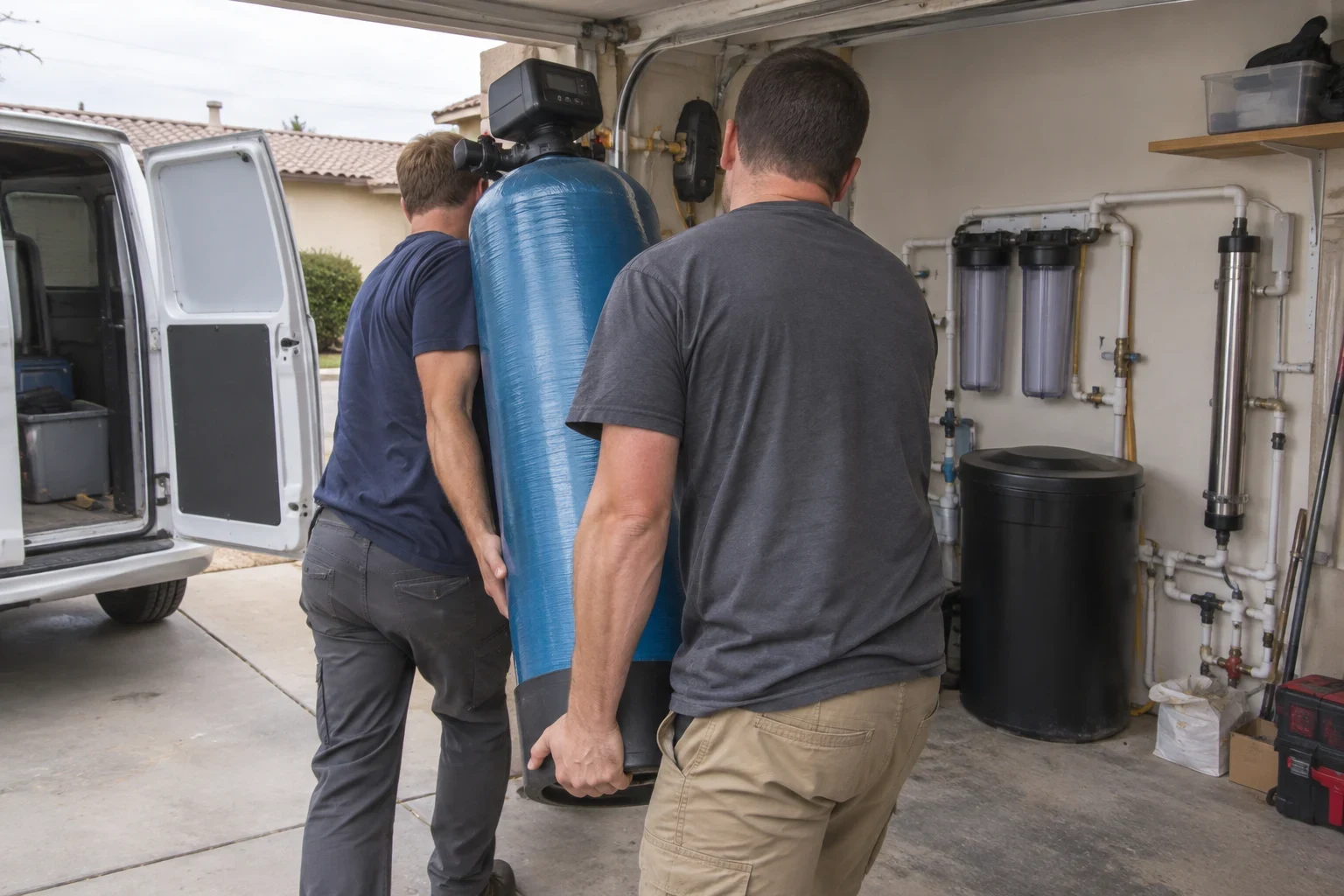
Water softener installation fills most of our calendar. We fit a resin tank and control valve sized to your household's water use, connect it to your home's softener loop through a bypass, and route the drain line to an open air gap. We also handle whole-home filtration, under-sink reverse osmosis systems and automated salt delivery. Every install comes with a 2-year labor warranty and a 2-year installation warranty, and the equipment carries a 5-year warranty on internal valve parts.
Whole-Home Filtration
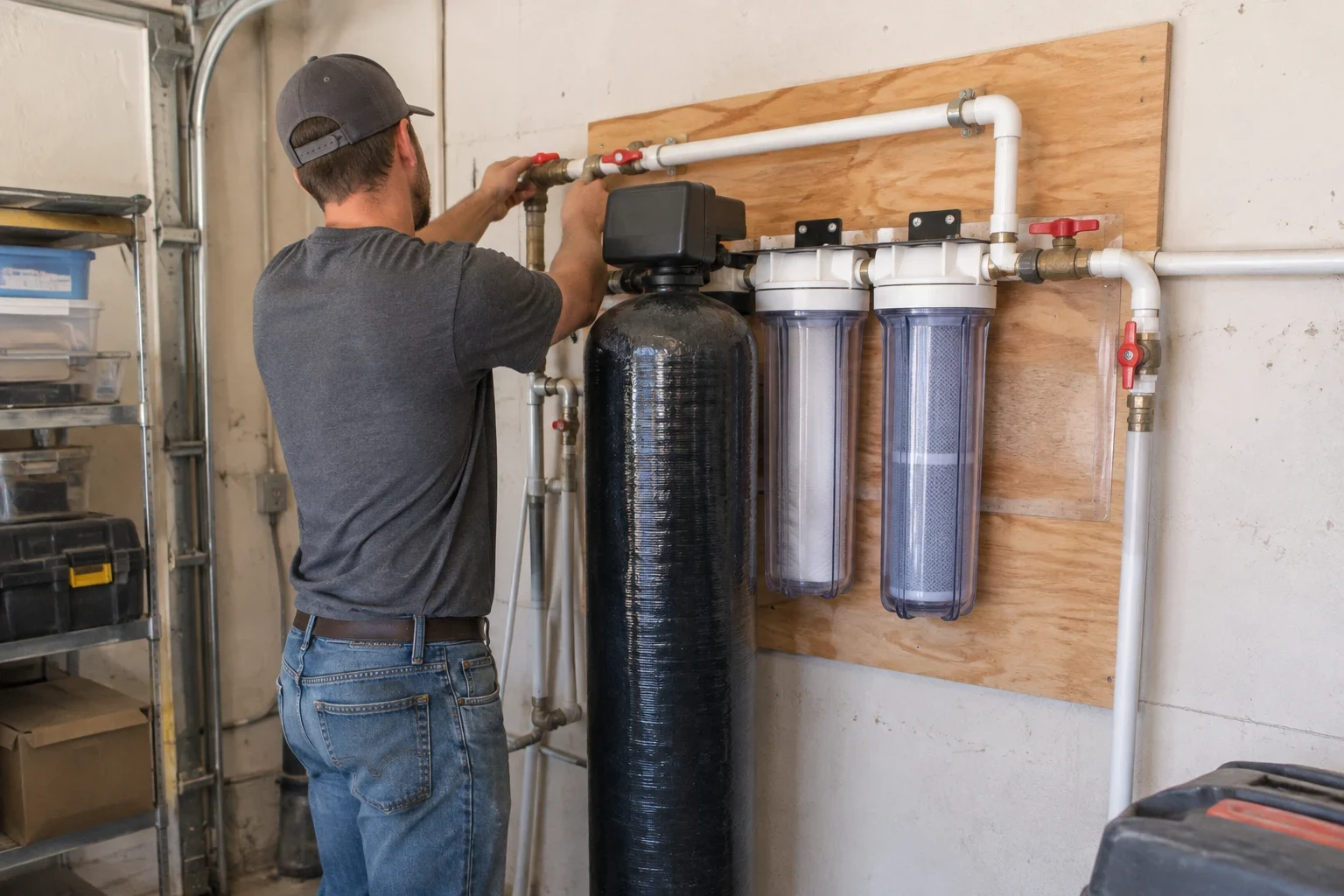
A sediment stage and carbon tank on your main supply line, so showers, laundry and every faucet get treated water, with each install step documented.
Automated Salt Delivery
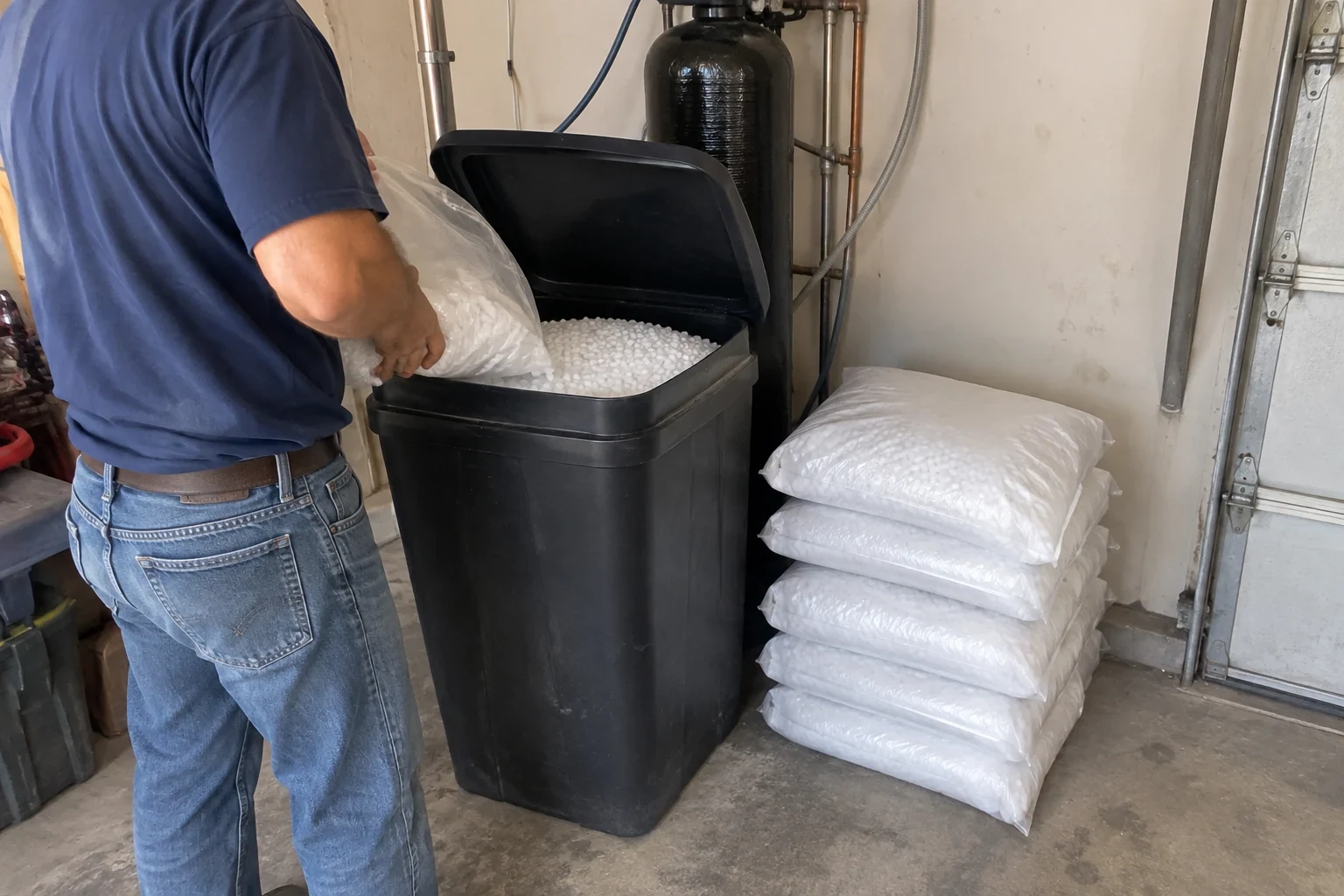
We bring softener salt on a set schedule, carry it to your brine tank, break up any bridge and leave a picture of the salt level after each visit.
Water Softener Installation
We size, plumb and program a water softener for your home, then hand you a documented record of the loop, valve and drain line we installed.
Reverse Osmosis System
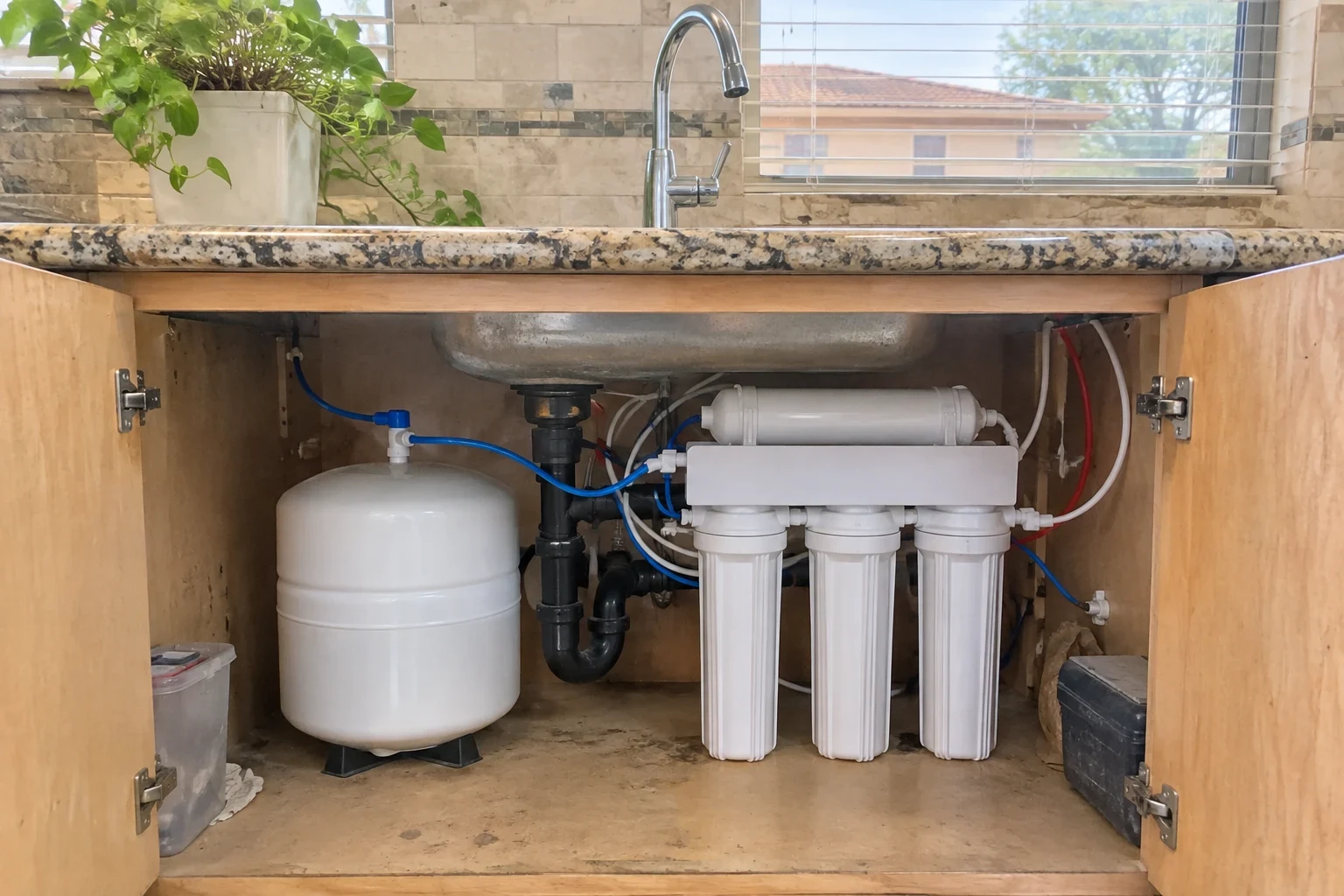
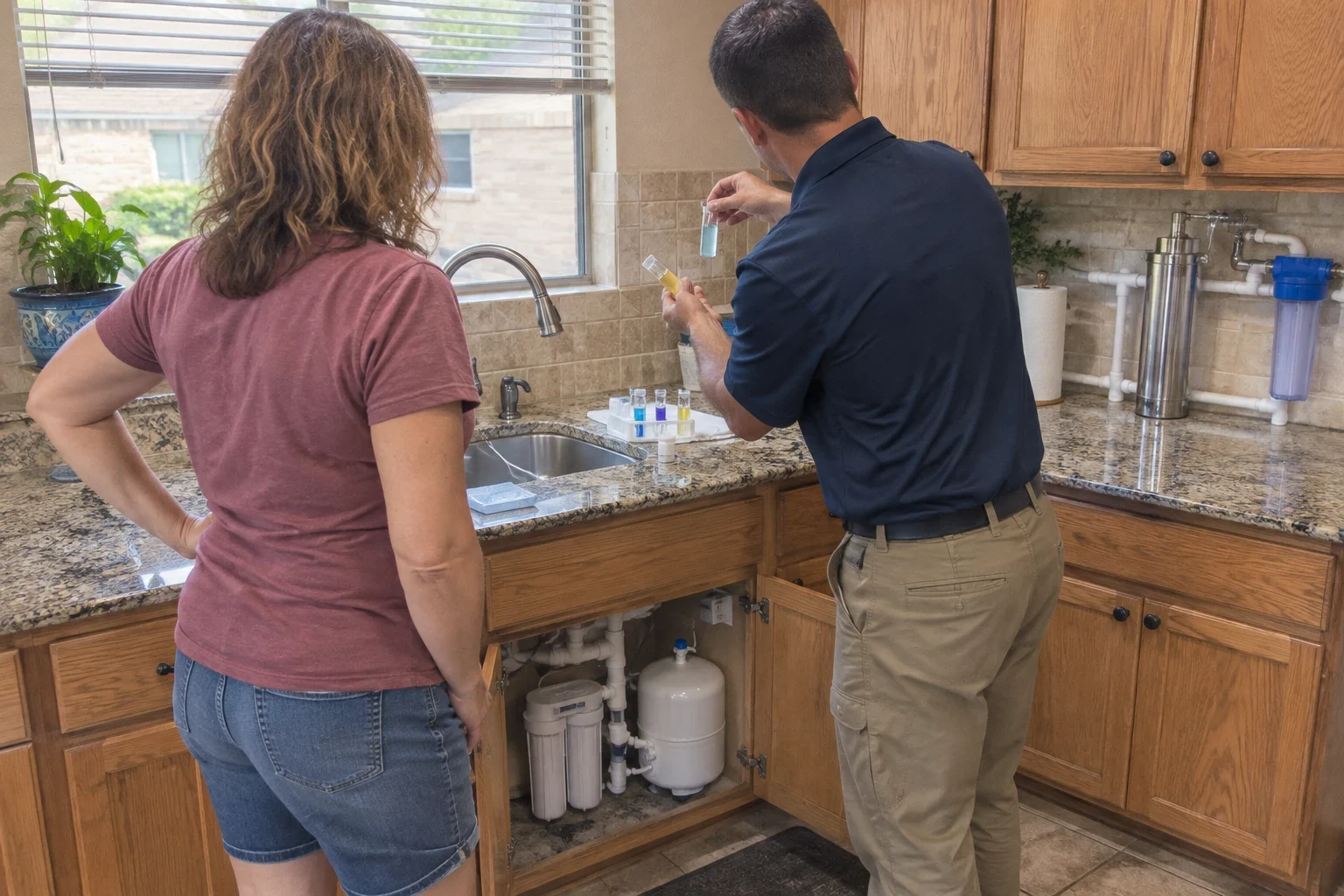
An under-sink reverse osmosis system for drinking and cooking water, fitted to your sink and photographed at each step of the install.
What Moves the Price of a Softener Install
Two installs rarely cost the same, because the job depends on your plumbing as much as on the equipment. Below are the items that raise or lower a quote. We cover each of them on the phone, then again once we've seen your setup in person.
After we look over your setup, you get your quote by phone or in person with each part and task written out. If something hidden changes the job once we start, we show you a picture of it and talk it through before doing more.
- Capacity of the system
- Resin volume and tank size follow from household size and how hard your water is. A larger tank costs more upfront but regenerates less often, which saves salt over the years.
- Your softener loop
- Many homes around the Valley already have a loop plumbed in the garage. If yours is missing, corroded or tucked in an awkward spot, adding or rebuilding it means extra pipe and labor.
- Control valve type
- A metered valve regenerates based on the water you actually use, while a timer valve runs on a fixed schedule. Metered valves cost a little more and usually use less salt.
- Removing what's there now
- Disconnecting and hauling off an old softener or filter is quick when the fittings are sound. Seized unions or brittle connections take longer to cut out and replace.
- Added filtration
- Pairing the softener with a carbon tank for taste, or with an under-sink reverse osmosis system for drinking water, adds equipment and plumbing to the same visit.
How We Work in Your Home
We photograph your setup when we arrive, at each stage of the work and when we finish. You see what we saw, so you can judge the job instead of taking our word for it.
- A record of your current setup
- Before anything is unbolted, we take pictures of the existing softener, the loop, the drain connection and any corrosion or scale at the fittings. If an old unit can keep running with a new part, those images show you why we think so.
- Parts named, not just priced
- Your quote lists the resin volume, the control valve type, the brine tank size and the fittings we plan to use. That lets you hold it up against any other quote line by line.
- Drain and bypass set up correctly
- The drain line ends above an open gap, so the water flushed out during regeneration has no path back into the tank. A bypass valve lets you take the softener offline and still have water at every tap. Both go in on every job, and both end up in your picture set.
- Programmed for your household
- We set the regeneration schedule from the number of people in your home and the hardness your water provider publishes. That keeps the valve from spending salt and water on resin that still has capacity left.
- A clean finish
- Drop cloths go down before the old tank comes out. When we leave, the work area is swept and the old equipment leaves with us.
About Water Softener Sun Lakes
Water Softener Sun Lakes puts softeners and filtration into garages, utility closets and under kitchen sinks around the area, then keeps those systems supplied with salt. We treat each install the way we'd want our own handled.
A softener sits in a corner nobody checks for years. The pictures we take show the state of the old fittings, the new connections and the drain setup, so you can judge the work yourself and hand a clear record to anyone who services it later.
We stick to four kinds of work: softeners, whole-home filters, reverse osmosis and salt delivery. Keeping the list short means the person you speak with on the phone knows the equipment that will end up in your home.
- Warranty
- 2-year labor warranty; 2-year installation warranty; 5-year warranty on internal valve parts
How an Install Day Runs
Most jobs follow the same four steps, and you know what comes next at each one.
- 1
A phone conversation
Describe the spots, scale or taste you're dealing with, who lives in your home and what equipment sits in the garage now. From that, we can point you toward the system that fits before anyone visits.
- 2
A look at your plumbing
We check the loop, the drain, the outlet that powers the control valve and the clearance around the unit, capturing each one for your record. Then you get a quote with every part named.
- 3
Installation
We shut off the water, protect the floor and remove any old equipment. The new tank, valve, bypass and drain line go in, and we picture the connections before the water goes back on.
- 4
Startup and handoff
We fill the brine tank, run a manual regeneration, check every joint for leaks and set the schedule. You get the full set of images plus a walk-through of the bypass and how to read the salt level.
Questions Homeowners Ask Us
Does my home really need a water softener?
Most water in the East Valley carries plenty of calcium and magnesium. It tends to show up as chalky rings around faucet bases, a cloudy film on dishes and scale that settles in the bottom of the water heater. A softener pulls those minerals out before they reach your fixtures and appliances, which helps them last. If your water isn't causing you trouble, we'll tell you that.
What's the difference between a softener and a whole-home filter?
A softener uses ion-exchange resin to trade hardness minerals for sodium or potassium. It does nothing for taste or smell. A whole-home carbon filter adsorbs chlorine and similar disinfectants that affect taste and odor. Many homes run both, with the carbon tank placed ahead of the softener so the resin sees less chlorine.
Will softened water taste salty?
Most people can't taste it, because the amount of sodium added is small. If you'd rather not drink softened water, an under-sink reverse osmosis system removes most dissolved solids, that sodium included, at your drinking and cooking tap.
Can you use my existing softener loop?
Usually, yes. We inspect the loop first and add it to your record. If the pipe or fittings are corroded or the loop is undersized, we explain what needs replacing and why before it goes into your quote.
How does automated salt delivery work?
We set a delivery schedule from your household size and how often your softener regenerates. Each visit, we top off the brine tank and check for salt bridging, the hard crust that can keep brine from forming. You no longer need to haul bags home from the store.
What warranty comes with your work?
Our installs carry a 2-year labor warranty. Should a fitting we joined start to weep or a valve setting we programmed need correcting within those two years, give us a ring and we'll return to sort it out.
How much upkeep does a softener need?
Keep salt in the brine tank and have the tank cleaned out now and then to clear sludge from the bottom. Carbon filters and reverse osmosis cartridges need replacing on a schedule, and we give you the intervals for the system you choose.
See What's Behind Your Softener Before Anything Changes
Tell us what your water is doing and what you have now. We'll explain which system fits your home and what the install involves.