ServicesAutomated Salt Delivery
Automated Salt Delivery in Sun Lakes
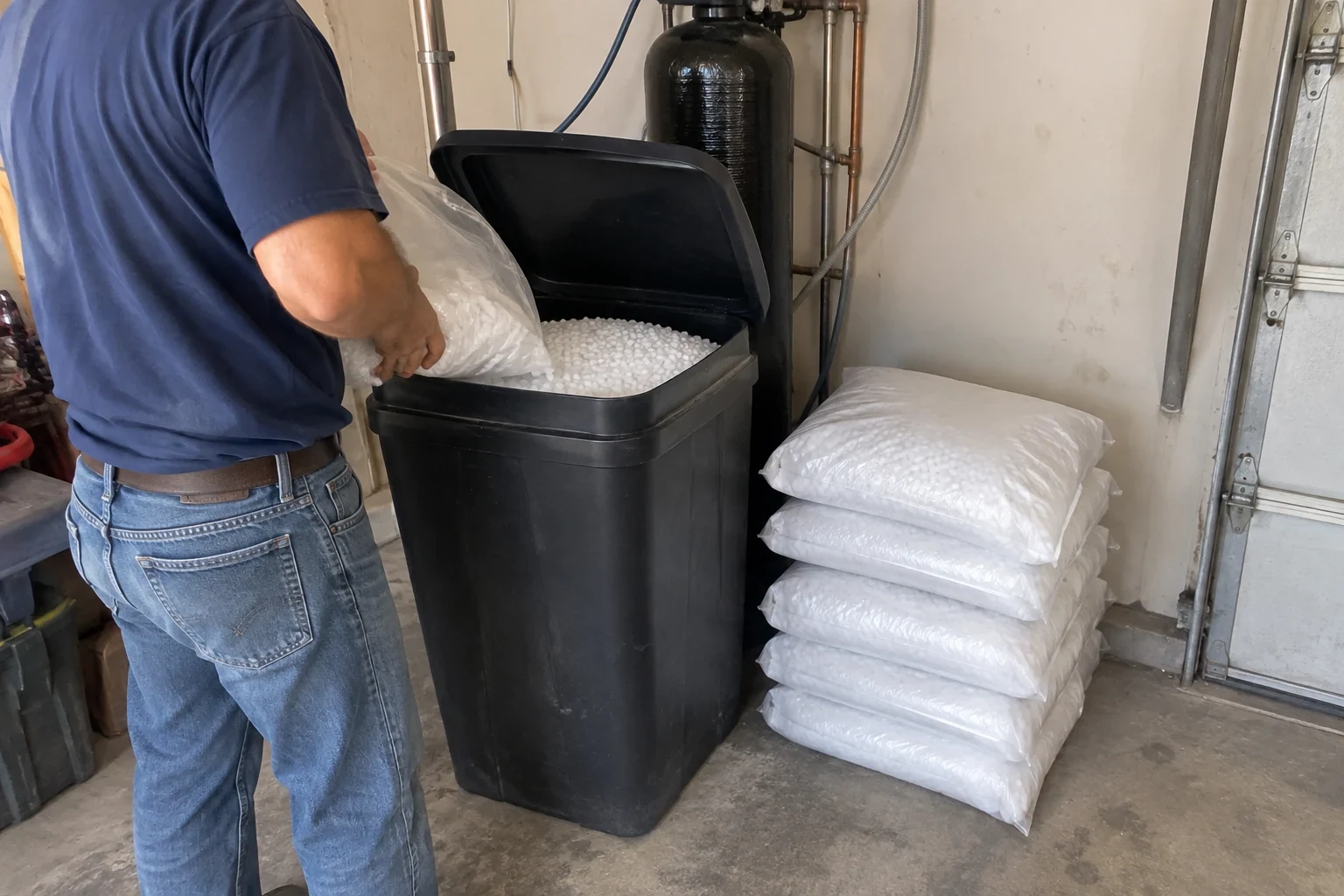
Your water softener only works while its brine tank holds enough salt to make brine. We set a delivery schedule that matches how fast your system uses salt, carry the bags in, load the tank and photograph the salt level before and after.
Why the Salt Level Matters More Than It Looks
A softener cleans hard water by passing it through a bed of resin beads that trade sodium ions for calcium and magnesium. When the beads fill up, the control valve runs a regeneration cycle that rinses them with brine drawn from the salt tank. If the tank runs low, the brine comes out weak, the resin never fully recharges and hard water slips through to your fixtures, water heater and glass shower doors.
Most homeowners only find the empty tank once white spots reappear on the shower glass. With automated salt delivery, restocking becomes our job instead of yours. We estimate how many bags your system burns through, set a recurring schedule and do the lifting on every trip. After each visit you get a picture of the tank, so you can check the salt level and the condition of the brine without opening the lid.
What We Do on Every Visit
Bags hauled in and poured
Our tech brings the salt from the truck to wherever your softener lives, usually the garage or a utility closet, and pours it into the brine tank. You never wrestle a 40-pound bag out of a car trunk again.
Salt bridge check
A salt bridge is a hard crust that forms across the tank while the brine underneath stays empty. We probe the salt with a rod and break any bridge apart so brine can form again.
Look for salt mush
Fine, wet sludge at the bottom of the tank can block the brine well and the intake screen. We note it on your visit record and tell you if the tank needs a cleanout.
Before-and-after photos
We shoot the tank before pouring and again when we finish. You see the starting level, any bridging or mush we found and how full we left it.
Schedule adjustments
If the tank is nearly full or nearly empty when we arrive, we adjust your interval. The goal is a tank that stays about half to two-thirds full between visits.
Signs Your Softener Is Running Short on Salt
Spots are back on glass and faucets
White scale on shower doors and chrome is calcium carbonate. It returns when the resin is not regenerating with full-strength brine.
Soap stops lathering
Hard water binds with soap and leaves film instead of suds. A low or bridged tank is one of the most common causes.
The salt level never seems to drop
If the tank looks full for months, a bridge may be hiding an empty space underneath. The salt is there, but the water cannot reach it.
You keep forgetting to buy salt
Some months it is easy to remember, others it slips. A set schedule removes the guesswork for the long, hot stretch of the year when water use climbs.
Lifting bags has become a chore
Bags of softener salt typically weigh 40 or 50 pounds, and the tank is often in a tight garage corner. We do the carrying and pouring.
How Salt Delivery Works
- 1
A phone call to set it up
Tell us the softener's brand or capacity if you know it, the number of people in your home and where the brine tank is located. We suggest a salt type and a starting interval.
- 2
First visit and baseline record
On the first visit we open the tank, document what we find and clear any bridge or loose crust. That first look tells us how fast your system really uses salt.
- 3
Load and record
We pour the right number of bags, level the salt and take an after picture. We also note anything worth your attention, such as standing water above the salt line or a cracked lid.
- 4
Recurring visits
We return on your schedule and repeat the same check. If your usage changes because of guests or seasons, we adjust the interval with you by phone.
What Affects the Cost of Salt Delivery
Price depends mainly on your softener's salt consumption and the effort involved in getting bags to the tank. We walk through the numbers by phone before the first visit, and nothing gets added at the door without your agreement.
- Type of salt
- Evaporated pellets dissolve cleanly and leave little residue. Solar crystals cost less but can leave more insoluble material. Potassium chloride is a sodium-free option that usually costs more and may need more product per regeneration.
- Bags per visit
- Household size, softener capacity and how hard the incoming water is all set how fast salt disappears. An older timer-based unit that regenerates on a fixed calendar uses more than a demand-initiated valve.
- Delivery interval
- Shorter intervals mean more trips. We aim for a schedule that keeps the tank stocked without overfilling it, since overfilled tanks bridge more often.
- Access and first-visit cleanup
- A tank behind stored boxes or up a step takes longer to reach. A heavy bridge or a layer of mush on the first visit adds time that later visits usually do not need.
Common Questions About Softener Salt Service
Something not covered here? (480) 613-3633
Will someone have to be at the house when you bring salt?
Usually not, as long as we can reach the brine tank. Plenty of homeowners leave the garage open or share a way in on the scheduled day. We settle the arrangement with you by phone, and the before-and-after photos show exactly what we did while you were away.
What kind of salt works best in my softener?
We recommend evaporated salt pellets for most residential softeners. They dissolve evenly and leave very little sludge. Rock salt holds more insoluble minerals that build up on the tank floor. If you want to reduce sodium, we can switch you to potassium chloride and change the quantity to match.
Will you service a softener someone else installed?
Yes. Nearly all residential brine tanks are filled the same way regardless of brand. If we spot trouble with the tank or the control valve, we send you the photo and explain what it means. Our Water Softener Installation page describes what a replacement involves if it comes to that.
How is a salt bridge different from salt mush?
A bridge is a hard shell of salt spanning the tank with a hollow gap below it, usually caused by humidity or overfilling. Mush is fine salt that has recrystallized and sunk to the bottom as sludge. We can break up a bridge in a few minutes. A thick layer of mush generally calls for draining and cleaning the tank.
What if I need to skip or shift a visit?
Give us a ring ahead of the next trip, whether you have family staying over or the salt is still piled high. We can move the visit later or stretch the interval between deliveries. That keeps the tank from being overloaded, which is when bridges tend to form.
Let Us Keep the Brine Tank Full
Tell us about your softener and where it sits, and we will suggest a salt type and a starting schedule. We also serve homeowners in Chandler, Gilbert and Queen Creek.