ServicesWhole-Home Filtration
Whole-Home Filtration in Sun Lakes
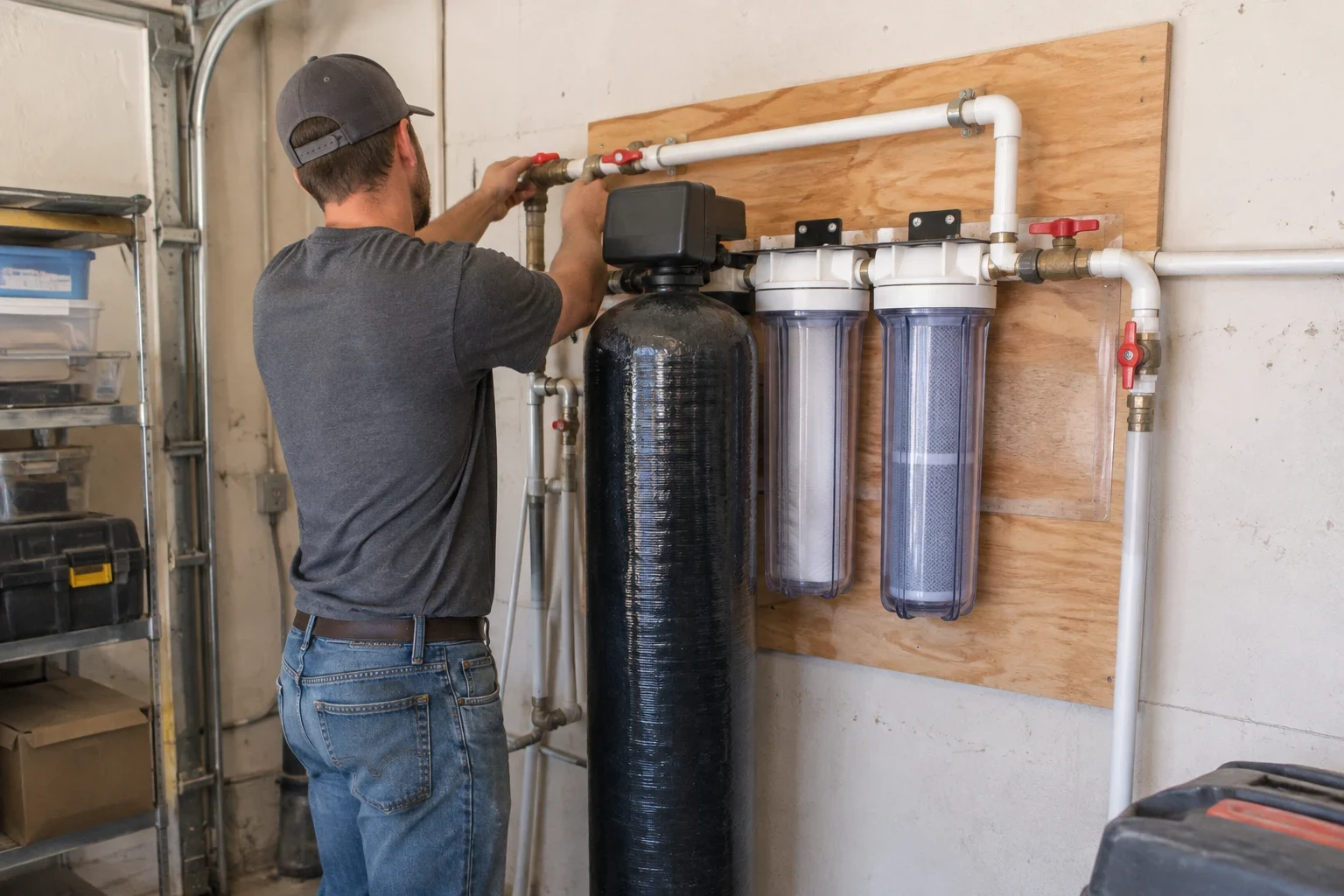
We mount a sediment stage and a carbon tank where city water reaches your home, so showers, laundry and every faucet get treated water. Before any pipe is cut, we photograph the entry plumbing. When the job is done, you get pictures of the finished work.
How point-of-entry filtration works
This equipment goes on the main supply line ahead of the branch to the water heater, so nothing downstream sees unfiltered water. A typical setup has two stages. The first is a sediment screen or cartridge that traps sand and flakes of pipe scale. The second is a bed of catalytic carbon that pulls chlorine and chloramine out by adsorption, which is why the disinfectant smell in a hot shower and the chemical aftertaste at the tap go away.
Choose it when the taste, smell or grit shows up everywhere, not only at the kitchen faucet. Carbon will not soften anything. Calcium and magnesium slip through it untouched, so white crust on fixtures and spotted glasses call for a softener instead. Many homes run both, with the carbon tank placed first so chlorine never reaches the softener resin.
Before work begins we take pictures of your plumbing, the main shutoff and any older equipment, then repeat that at the end. You keep the full set, so you know what was there and what changed.
What comes with the install
- 01
Media tank matched to demand
Your bathroom and fixture count tell us your peak draw in gallons per minute, and the tank is chosen to match it. Too small a tank costs you pressure when two showers run at once, and the water rushes past the carbon before it can be treated.
- 02
Sediment stage up front
Particles get trapped here first. Without it the carbon bed clogs early, and grit wears on valve seals further down the line.
- 03
Catalytic carbon and control head
Catalytic carbon handles chloramine far better than ordinary granular carbon. On backwashing models the control head flushes the bed periodically so water does not cut channels through it or compact it.
- 04
Bypass and isolation valves
The bypass routes water around the system during service so the rest of the house stays on. Valves on the inlet and outlet sides turn a media change into a short job.
- 05
Ground bonding on copper
Cutting into copper can interrupt the path many homes rely on for electrical grounding. We add a bonding jumper across the new section to keep that path intact.
- 06
Picture set and walkthrough
You receive photos taken before, during and after the job. We also show you the bypass handle and how to tell when the prefilter is due.
Questions about Whole-Home Filtration?
Call(480) 613-3633Signs your home could use whole-house filtration
Chlorine odor in a steamy bathroom
Hot water releases disinfectant into the air, so the smell peaks while the shower is running. Point-of-use filters at one sink never touch the water feeding your shower heads.
Dry skin and brittle hair
Plenty of people notice tight skin and dull hair after showering in chlorinated water. A carbon tank on the main supply treats every bathroom in your home at the same time.
Specks in faucet screens and washer inlets
Sandy grit or dark flakes collecting in aerators, or on the inlet screens of a washing machine, mean sediment is coming in with the supply. A prefilter at the main catches it before it spreads through the house.
Off taste at every tap
When the bathroom sink tastes just as bad as the kitchen, the cause is upstream of both. Treatment belongs where water enters your home.
Softener resin wearing out early
Chlorine slowly breaks down the resin beads inside a softener. Putting a carbon stage ahead of it helps the resin last longer.
How the install day runs
- 1
Inspect and record
We find your main shutoff and the entry point, often a plumbed loop in the garage in homes around here, check pipe material and pressure, and photograph everything before we touch it.
- 2
Shut off and cut in
We close the main, drain the line and add the bypass and isolation valves with fittings matched to your copper, CPVC or PEX.
- 3
Set tanks and connect
The prefilter and carbon tank go on a level pad or bracket. We connect a drain line and power where a backwashing head needs them.
- 4
Flush and pressure check
Fresh carbon sheds fine black dust, so we flush until the water runs clear, then check every joint for leaks and compare pressure to the reading we took earlier.
- 5
Clean up and hand over
We clear the work area, take finished photos and show you how the bypass works.
What moves the price
Plumbing layouts differ, so we price after seeing yours and hearing what you want to fix. You get your quote by phone or after we look at the install spot, with the parts listed out so nothing turns up later as a surprise.
- Cartridge housings or backwashing tank
- Cartridge systems cost less up front but need more frequent changes. Backwashing tanks cost more to install and hold far more carbon.
- Tank size and media type
- Larger homes with more bathrooms need more media. Catalytic carbon costs more than standard carbon.
- Existing loop or new plumbing
- A ready loop shortens the job. No loop means running new pipe to the entry point, and sometimes adding a drain and an outlet.
- Condition of valves and pipe
- A seized main shutoff or corroded fittings at the entry point get replaced before we connect anything, and we show you pictures of why.
Whole-home filtration questions
Will a whole-home filter soften my water?
No. Sediment screens and carbon media leave calcium and magnesium in the water, and those two minerals are what cause hardness. If white scale and spotted glasses are the problem, our water softener installation is the fix, and we can plumb the carbon tank upstream of the softener so both work together.
Will I lose water pressure after the install?
You should see only a slight change when the tank is sized to your peak flow. We take a pressure reading before we cut in and another after the flush, so you can compare the two numbers yourself. Large losses almost always trace back to a tank that is too small or a sediment cartridge that has been left in too long.
How often does the media need changing?
The sediment cartridge is the part you replace most, usually every few months, depending on how much debris comes in with your supply. A backwashing carbon tank lasts far longer than carbon packed into a cartridge housing. We show you the signs to watch on your system, like pressure slowly dropping or the chlorine smell returning.
Do I still need a reverse osmosis system for drinking water?
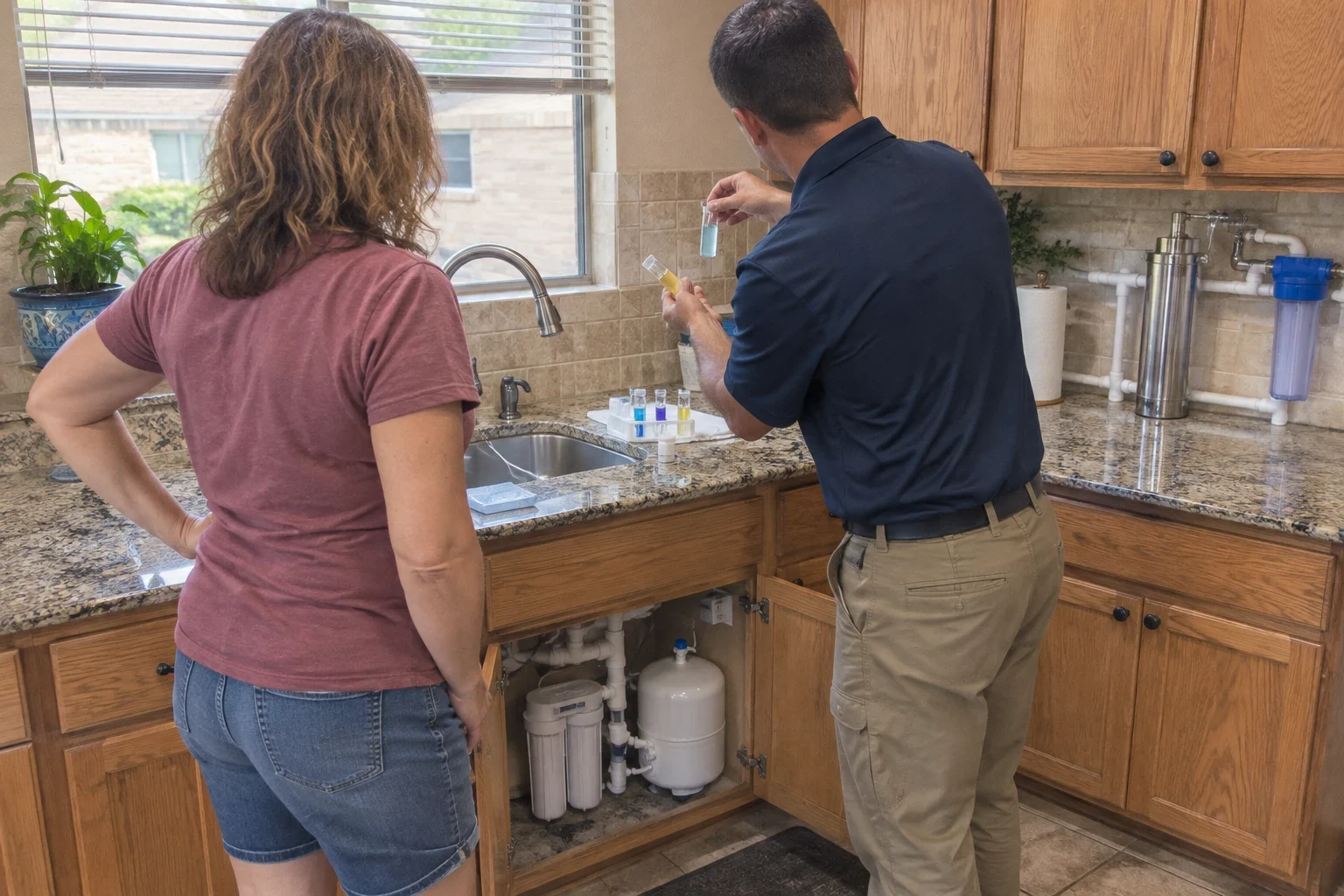
Not always. Carbon at the main line clears up taste and odor everywhere in your home. A reverse osmosis system under the kitchen sink goes a step further and cuts dissolved solids in the water you drink and cook with. Some homeowners add one, others find the carbon tank is enough.
Can the system go outside?
In many cases it can, but direct sun and summer heat wear down plastic tanks and control heads. We suggest a shaded spot or a cover and talk through the tradeoff with you before anything is mounted.
See what is on your main line before deciding
Tell us what you are noticing at the tap and where your main comes in. We will explain which filter fits and what the install involves.