ServicesWater Softener Installation
Water Softener Installation in Sun Lakes
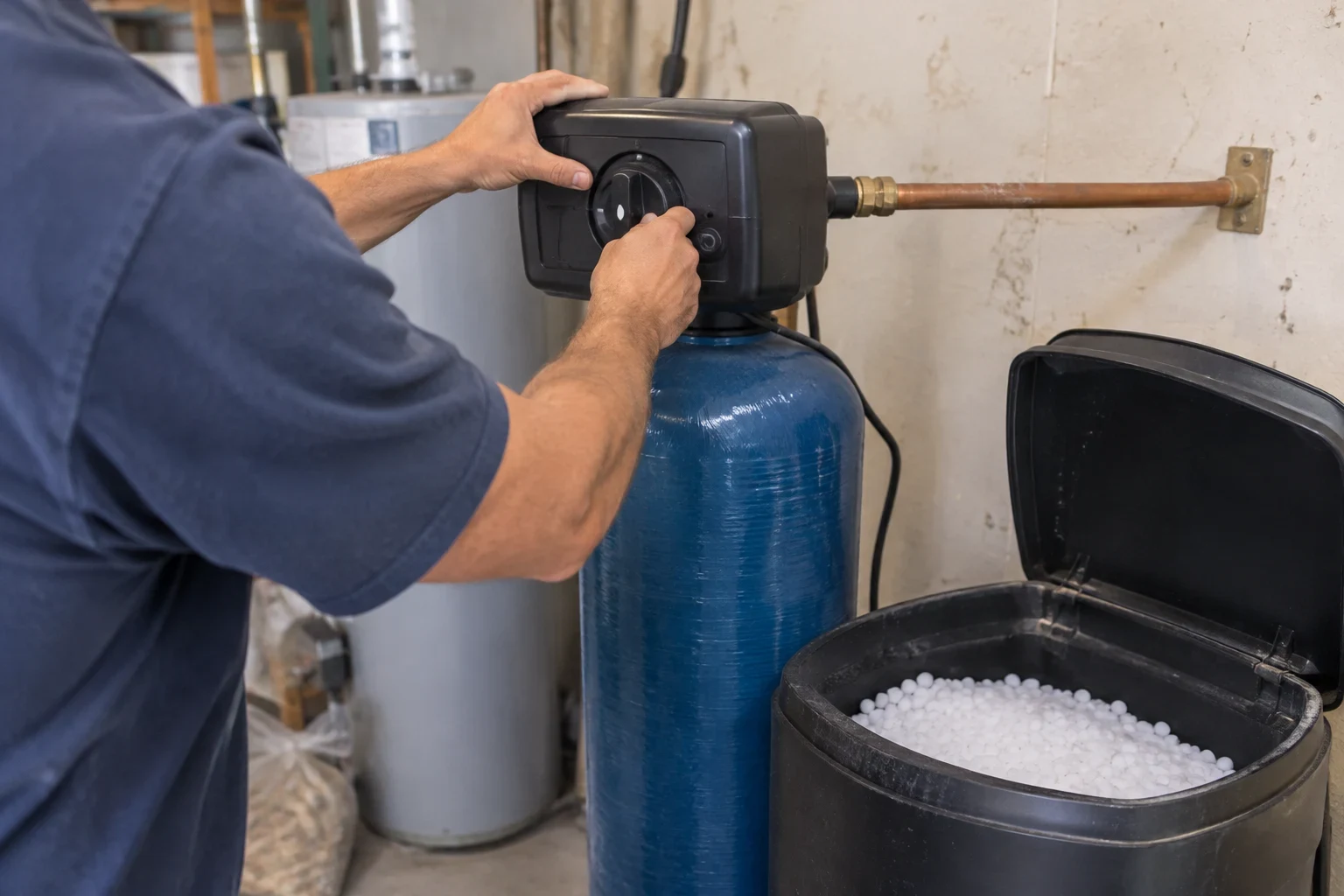
We install a water softener sized to how much water your home actually uses, plumb it with a bypass and a proper drain air gap, and program the control valve before we leave. You get photos of the existing plumbing, each connection we make and the finished setup.
How softening works and where it fits
Hard water carries dissolved calcium and magnesium. They stay in solution until heat or evaporation drives them out, and then they set up as calcium carbonate scale in the water heater, on shower glass and inside faucet aerators. A softener routes water through a tank of small resin beads. Each bead trades the hardness ions it captures for sodium or potassium ions it was charged with, which keeps scale-forming minerals from ever reaching your fixtures.
Softening solves mineral problems: crusty aerators, spotted glassware, a water heater that pops and rumbles, soap that barely lathers. It does nothing for chlorine taste, and it does not lower dissolved solids in drinking water. Whole-home filtration and a reverse osmosis system handle those jobs, and if your complaint points to one of them instead, we will say so plainly.
Before any pipe is cut, we document the main line, the existing loop or tie-in point and the drain location. That record comes to you along with the finished install, so you know what sits behind the cabinet or along the garage wall.
What the installation includes
Sizing by grain capacity
We work out daily softening demand from household size, water use and the hardness of your supply, then match a resin tank with enough grain capacity to regenerate every several days rather than every night. An undersized tank burns salt and water; an oversized one can let resin sit too long between cycles.
Metered control valve
The valve we fit tracks actual water flow through a small turbine meter and starts a regeneration only after the resin has softened close to its rated capacity. A timer-only valve regenerates on the calendar, which wastes salt and water during weeks your home uses less.
Bypass and isolation valves
Every install gets a bypass so you can take the softener offline for service without shutting off water to your home. We also leave a hard-water hose bib unsoftened where you want it for landscape irrigation.
Drain line with an air gap
Rinse water from each regeneration leaves the valve through a dedicated line that ends above a code-approved standpipe or drain, with open air between the two. That physical break means wastewater cannot be pulled back into the softener.
Brine tank setup and first fill
We set the brine tank, connect the brine line and safety float, add the first salt, and run a full manual regeneration to confirm the draw and rinse cycles work. If you want salt brought to you after that, ask about our automated salt delivery.
Photo record of the job
You receive images of the before condition, each fitting and valve as installed, and the programmed valve settings.
Signs your home needs a water softener
White crust on fixtures
Chalky buildup on shower heads, faucet aerators and the edge of the toilet bowl is calcium carbonate left behind as water evaporates.
A noisy water heater
Scale settles at the bottom of the tank and traps water under it. When the burner or element heats that pocket, it pops and rumbles, and the heater works harder for the same hot water.
Spots and film on dishes
Glassware that comes out cloudy even with rinse aid usually points to minerals, not the dishwasher.
Soap that will not lather
Calcium and magnesium bind with soap to form curd. You use more shampoo and detergent and still feel residue on skin and towels.
An old softener that stopped keeping up
Resin breaks down over time, especially when exposed to chlorine. If hard-water spots came back even though the brine tank is using salt, the resin bed or valve may be worn out.
How installation day runs
- 1
Inspect and document
We find the main line, check whether your home already has a softener loop, and note pipe material, drain location and nearby power. Each of those gets a photo before any work starts.
- 2
Shut off and plumb
We close the main, drain the line, and connect the bypass, inlet and outlet using fittings matched to your copper, PEX or CPVC. Water is usually off for only part of the visit.
- 3
Drain, brine and power
We run the drain line to its air gap, connect the brine tank and plug the valve into a nearby outlet.
- 4
Program and regenerate
We enter hardness, capacity and regeneration time into the valve, then run a full cycle and check for leaks at every joint.
- 5
Hand-off and cleanup
Before we go, we walk you through turning the bypass handle, topping up the brine tank and reading the codes on the valve screen. Then we clear away cut pipe and packaging and send you the complete set of install images.
What moves the cost of a softener install
The price depends on the unit your home needs and how much plumbing it takes to put it in place. We explain each piece of the quote over the phone so nothing on the final bill is new to you.
- Tank capacity and valve type
- A tank with more grain capacity and a metered valve costs more up front than a small timer unit. Because it regenerates only when the resin is actually spent, it tends to go through less salt and rinse water as the years add up.
- Pre-plumbed loop or a new tie-in
- Many homes have a softener loop already stubbed out in the garage, which shortens the job. When there is no loop, we cut into the main line and build the inlet, outlet and bypass connections from scratch.
- Drain and power access
- If no drain or outlet sits near the install spot, extra drain line or routing adds time and material.
- Removing an old unit
- When a failed softener is still in place, we disconnect it and haul it off. If its fittings have corroded, replacing them adds parts and labor that a clean install spot would not need.
Water softener installation questions
Something not covered here? (480) 613-3633
Can you install where my old softener was?
Usually, yes. When the existing loop and drain connection are sound, we reuse them. If we find green or white corrosion on the fittings, or a drain hose pushed straight into the standpipe with no gap, we photograph it, show you, and fix it during the install.
Will softened water taste salty?
Not in any way most people notice. The sodium added is proportional to the hardness removed, and it is far less than you would taste. If you prefer, a reverse osmosis system at the kitchen sink removes it from drinking water.
Do I have to use sodium salt, or is potassium an option?
Potassium chloride is an option, and the same control valve handles it. It exchanges hardness slightly less efficiently than sodium chloride, so we set a higher salt dose per regeneration when we program the valve for it.
Does a softener remove chlorine?
No. A softener only exchanges hardness minerals. For chlorine taste and odor, whole-home filtration with carbon is the right tool, and it also protects softener resin from chlorine wear.
How long does installation take?
Most installs on an existing loop take a few hours. A new tie-in to the main line takes longer, and we give you a time estimate when we quote the job by phone.
Ready to stop scrubbing scale?
Tell us about your home, where the main line runs and what you are seeing. We will explain the unit size we would use and what the job involves, and we serve homeowners across Sun Lakes, Chandler and nearby towns.